Fixed Wire Testing

EICR inspections for commercial offices
Electrical faults cause thousands of workplace fires in the UK each year. Many stem from issues hidden behind walls, beneath floors, or within ageing distribution boards – problems that aren't visible until something goes wrong.
Fixed wire testing catches these risks before they become serious.
A comprehensive look at your electrical health
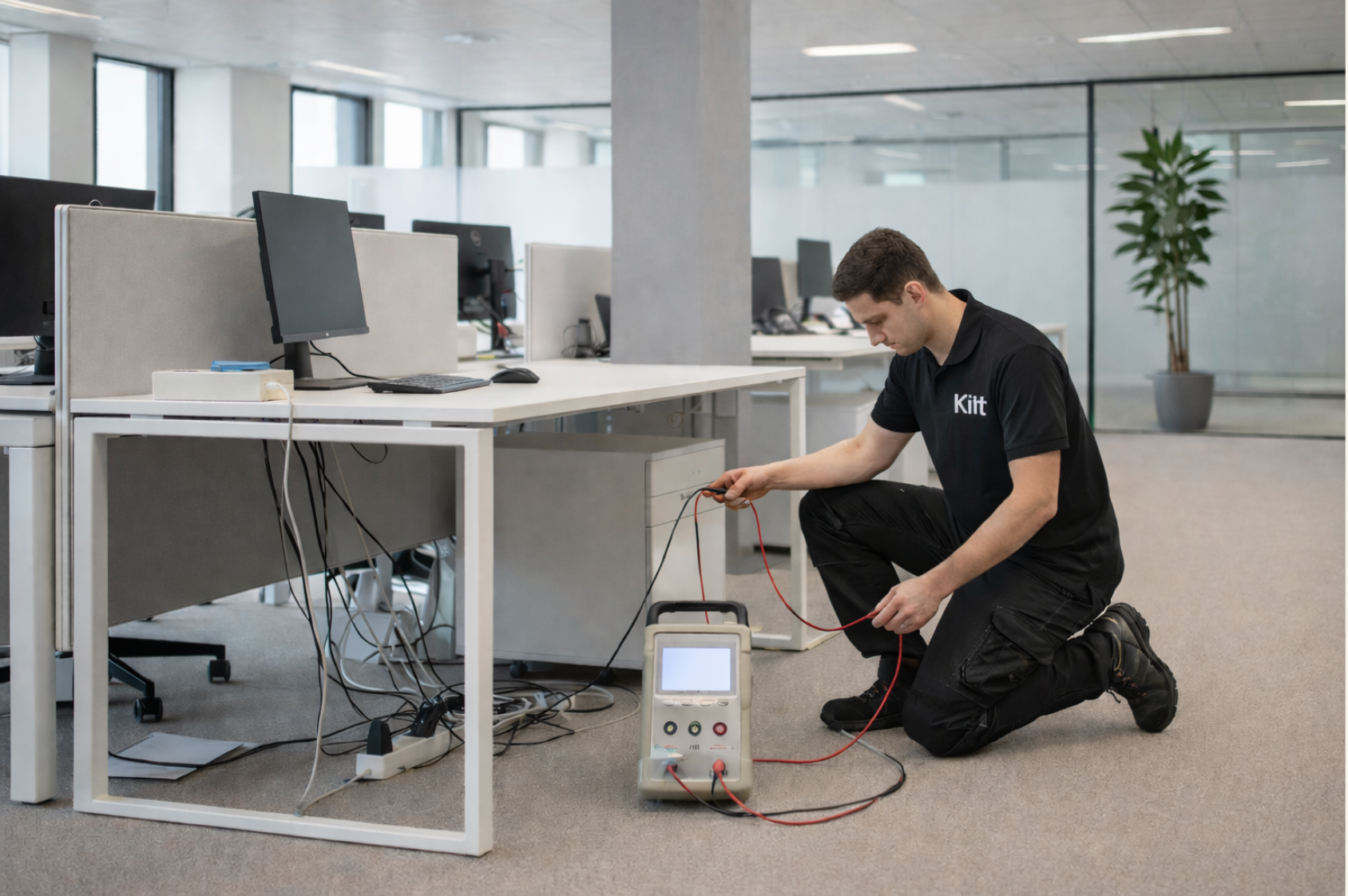
Fixed wire testing, also known as an EICR (Electrical Installation Condition Report), is a detailed inspection of an office's permanent electrical infrastructure. Unlike PAT testing, which covers portable appliances, EICR testing focuses on the fixed wiring that powers your space, and is often required to maintain business insurance coverage.
An EICR inspection typically covers:
- Distribution boards: the main panels that distribute electricity throughout your office
- Fuse boards and circuit breakers, including RCDs (residual current devices) that cut power in the event of a fault
- Fixed wiring, including the cables running through walls, ceilings, and under floors
- Sockets and switches checked for wear, damage, or improper installation
- Earthing and bonding for proper grounding and safety
The inspection identifies defects, deterioration, or non-compliance with current electrical safety standards. Any issues, such as broken sockets or faulty wiring, are outlined in a detailed report with required remedial actions.
How often is fixed wire testing required?
Under UK law, employers must ensure electrical systems in the workplace are safe and properly maintained. The Electricity at Work Regulations 1989 require fixed electrical installations to be inspected at appropriate intervals.
For most commercial offices, EICR testing is recommended every five years. More frequent testing may be advised for older buildings, high-use environments, or following significant refurbishment.
An up-to-date EICR certificate demonstrates electrical safety compliance and is often requested by landlords, insurers, and during lease negotiations.
Understanding your EICR report
The EICR report categorises any faults by severity, so you know what requires immediate attention and what can be scheduled:
- C1 (Danger present): Immediate risk requiring urgent action
- C2 (Potentially dangerous): Requires remedial work as a priority
- C3 (Improvement recommended): Not immediately dangerous, but advisable to address
- FI (Further investigation): Additional inspection needed to determine the extent of a potential issue
How Kitt manages your EICR compliance
Kitt arranges fixed wire testing for all managed buildings, covering both communal areas and individual office spaces. Certified third-party electrical specialists carry out testing; this work requires qualifications beyond general maintenance, which is why we use accredited external testers.
We handle scheduling, coordination, and documentation, ensuring your electrical systems are tested on time, and any remedial work is completed to standard. Certificates are provided for your records.
Looking for a fully managed office in London?
Explore our available spaces or contact our team.
.jpg)