PAT Testing

Annual inspections for portable office equipment
Every office is filled with them. Laptop chargers and phone docks. Kettles and coffee machines. Desk fans in summer, portable heaters when the weather turns. Microwaves, monitors, printers, and the everyday equipment that keep a workplace running.
Portable appliance testing (PAT) is the process of checking that all this plug-in equipment is safe to use. It's one of the more practical aspects of electrical compliance: less about infrastructure hidden behind walls, more about the items your team touches every day.
What gets tested?
PAT testing covers any portable electrical equipment that plugs into a socket:
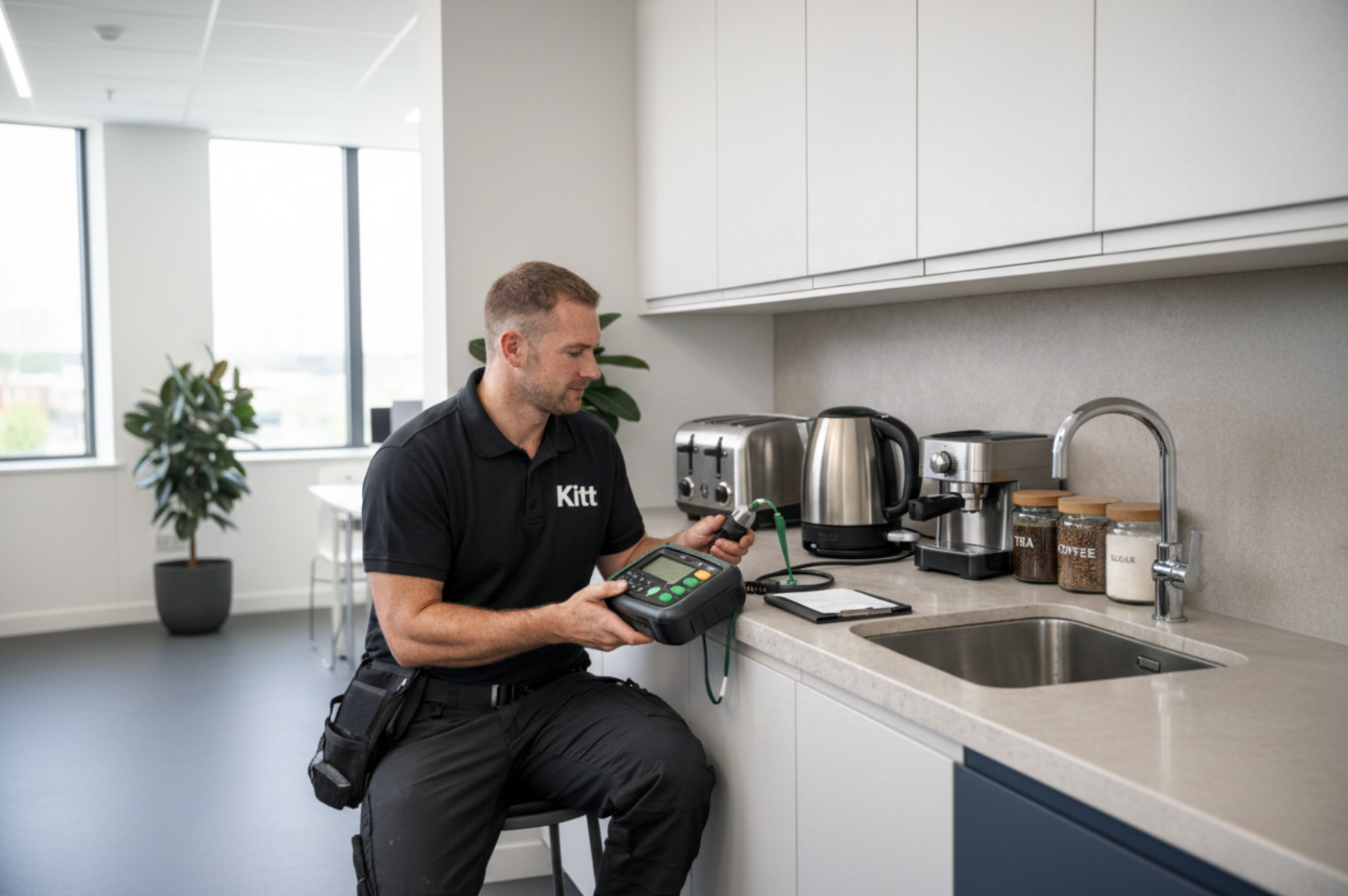
- Kitchen appliances: kettles, microwaves, toasters, coffee machines
- Personal devices: laptop chargers, phone chargers, monitors
- Comfort equipment: desk fans, portable heaters
- Office equipment: printers, laminators, shredders
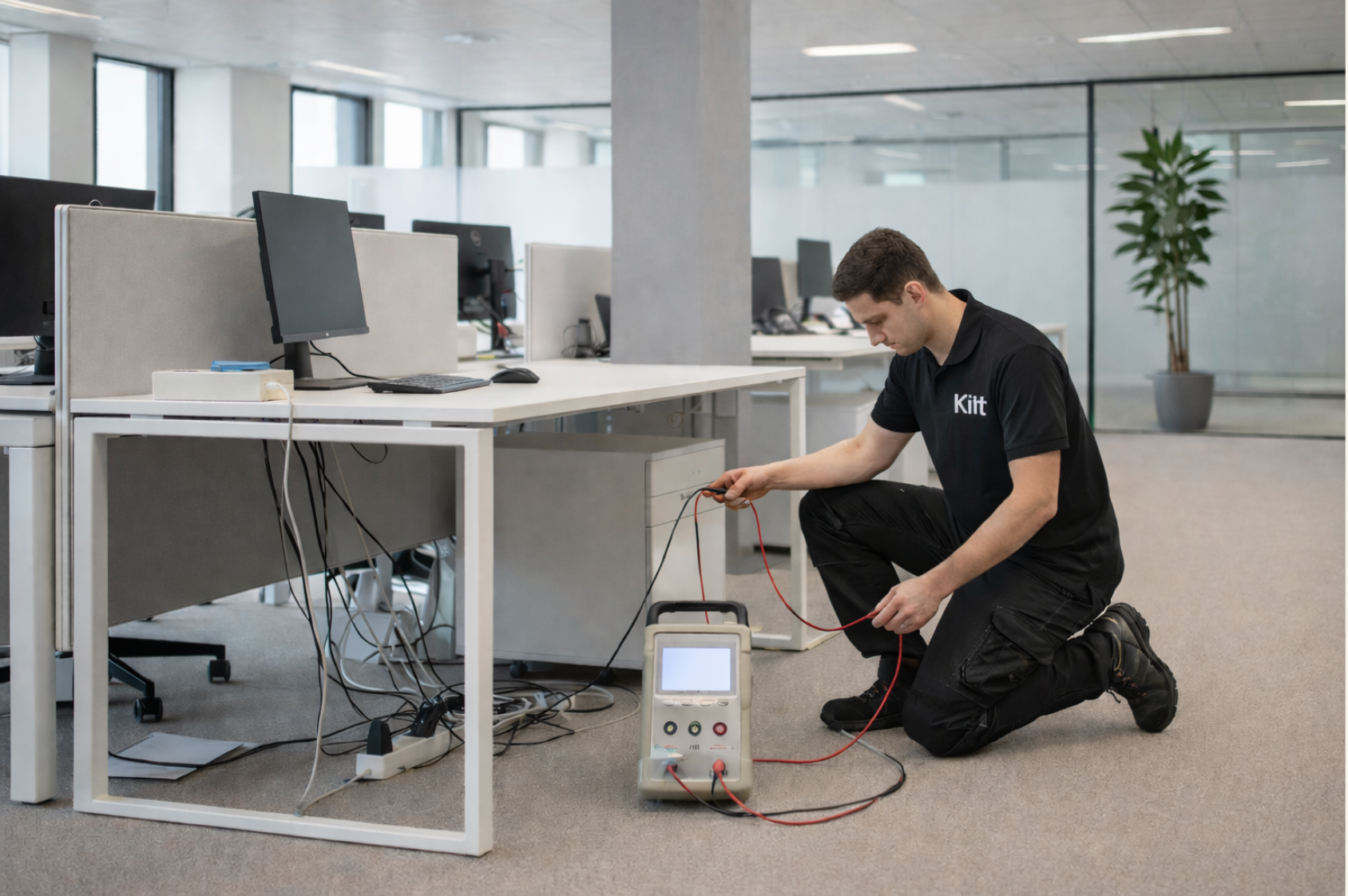
Each item is inspected for visible damage: frayed cables, cracked casings, damaged plugs, then tested to confirm the electrical load is safe and there are no faults that could cause harm.
Items that pass are labelled with a sticker showing the test date and the next inspection due. Those that fail are removed from service until repaired or replaced.
Is PAT testing a legal requirement?
This is where things get slightly nuanced. No law explicitly mandates PAT testing by name. However, the Electricity at Work Regulations 1989 require that all electrical equipment in the workplace is maintained in a safe condition, and the Health and Safety at Work Act places a general duty on employers to ensure employee safety.
In practice, the legal requirement comes down to demonstrating you've taken reasonable steps. Regular PAT testing is the most widely accepted way to evidence this, and it's what insurers, auditors, and health and safety inspectors expect to see.
For most offices, annual testing is standard. Higher-risk environments or frequently moved equipment may require more regular checks.
The logistics of testing portable equipment
PAT testing might sound straightforward, but in a busy office, it presents logistical challenges. The clue is in the name: portable equipment moves around. Laptop chargers go home in bags. Personal fans migrate between desks. That kitchen appliance someone brought from home? It needs testing too.
This is why testing typically happens during working hours rather than overnight. It's the only way to ensure equipment actually in use gets inspected. It requires coordination with your team, but a good testing partner works efficiently, minimising disruption while ensuring nothing is missed.
How Kitt approaches PAT testing
In a Kitt-managed office, PAT compliance is scheduled as part of your annual compliance calendar. We coordinate the testing, liaise with your team on timing, and manage the documentation: records of what was tested, what passed, and what requires action.
When equipment fails, we flag it for removal from use. If replacements are needed for building-provided items, we handle that too.
Questions about PAT testing? Get in touch.
Looking for a fully managed office in London?
Explore our available spaces or contact our team.
.jpg)